Psychological safety in teams: what The Emperor's New Clothes teaches leaders about silence
Nobody can see the cloth, yet everyone praises the pattern. Andersen's tale about why organisations go quiet on what matters most, and who ends up telling the leader
Psychological safety in teams tends to come up too late, at the post-mortem of a failed project or after a key client has gone, when it turns out that half the team saw the problem a month earlier. Hans Christian Andersen described the mechanism in 1837 in The Emperor's New Clothes. There are no villains among the courtiers. Each of them makes a sensible individual choice, and that choice is to say nothing.
- Psychological safety is a shared belief that you will not be punished or humiliated for a question, a doubt or bad news. The term comes from Harvard Business School professor Amy Edmondson.
- In the tale nobody can see the cloth and nobody says so, because each person fears being exposed as unfit for their post. Silence at work follows the same logic: it protects the status of whoever stays quiet.
- Leaders tend to hear the truth from people with nothing to lose: newcomers, outsiders, people on their way out. When those are the only sources, the leader learns about problems last.
- Safety is built by the leader's behaviour: how they react to the first piece of bad news, whether they ask before they tell, whether they admit their own mistakes out loud.
The story, briefly
Two swindlers arrive at court posing as weavers. They promise a cloth of extraordinary beauty with one special property: it is invisible to anyone unfit for their office or hopelessly stupid. The emperor pays; the weavers sit at empty looms. He sends his honest old minister to check on progress. The minister sees nothing, fears for his position and praises the pattern. A second official does the same. Then the emperor comes himself, sees nothing, and praises it too.
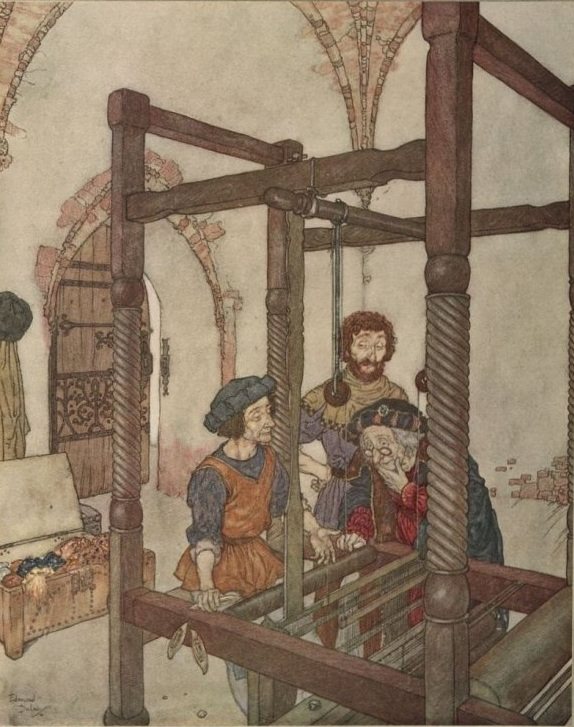
Then comes the procession. The whole town admires the outfit until a child in the crowd says, "But he hasn't got anything on!" The father repeats it, the words travel, and soon the entire crowd is shouting. The emperor shivers, suspecting they are right. Still, he decides the procession must go on, carries himself more proudly than ever, and his chamberlains walk behind him holding a train that is not there.
Andersen took the plot from a fourteenth-century Spanish collection, Count Lucanor by Juan Manuel. In that version the cloth is invisible to any man who is not the son of his presumed father, so the fear concerns legitimacy. Andersen moved the fear to competence and position. A family secret became a story about careers and status, which is why it reads so naturally in an office.
What psychological safety in teams actually means
Edmondson defines psychological safety as a shared belief within a team that it is safe to take interpersonal risks: to ask a basic question, admit an error, challenge the boss or raise a concern without damage to your standing. The idea spread widely after Google's Project Aristotle, a study of what distinguished the company's most effective teams, found psychological safety to be the most important factor.
The risk in question is interpersonal. A psychologically safe team can still be demanding, fast-paced and full of argument; working in it can be uncomfortable. The difference shows when telling the truth becomes dangerous. Then high standards quickly turn into performance theatre: everyone reports what is expected, and real problems go underground.
Why the courtiers keep quiet
Every courtier reasons sensibly. If I admit I see nothing while everyone else apparently sees it, I declare myself unfit. Agreeing is easier. Each person stays silent alone, and those separate silences add up to collective blindness.
The same forces operate in companies:
- Status. Admitting you do not understand the strategy or cannot see the promised results means looking weak in front of peers.
- Memory. If the last messenger was punished, the next one will not come.
- The room. When everyone in the meeting nods, the person with doubts concludes that the problem must be theirs.
There is a deeper layer too. The emperor needs to be seen as magnificent, and the court can feel it. Teams read a leader's needs without being told. If the person at the top needs to be right, clever and flawless, people start protecting that image. Analytical psychology calls this social mask the Persona. The more completely a leader identifies with the role, the harder it becomes for anyone to tell them something the role does not allow.
Who tells the leader the truth?
In the tale it is a child: someone with no position to lose who has not yet learned what one is supposed to see. In organisations the role falls to people in a similar place: newcomers in their first weeks, outside consultants, employees who have already decided to leave, sometimes customers.
These are useful sources and unreliable ones. Newcomers learn the rules quickly and fall silent. Leavers speak at the exit interview, when it is too late to change anything. If the truth only ever reaches the top through such "children", the system is designed for silence and the leader will be the last to know.
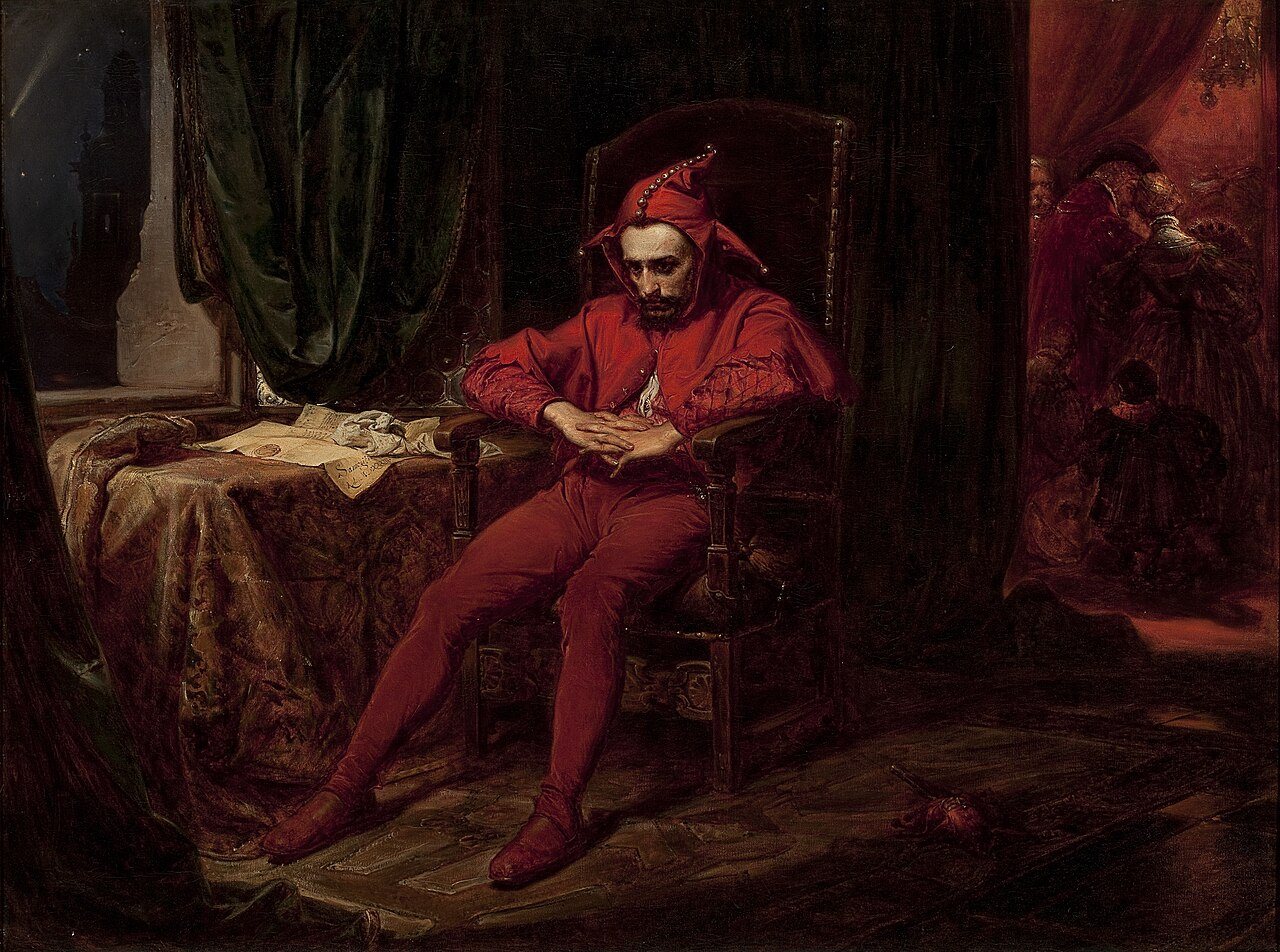
For centuries court jesters played a similar part, allowed to tell the king what would have cost anyone else dearly. In Jan Matejko's painting the jester Stańczyk sits alone in a dark room while a ball goes on next door. On the table lies a letter about the loss of Smolensk. The news is already in the palace; he is the only one who grasps what it means. Many executives know this scene from the other side: later it emerges that someone in the company understood everything long ago but was never in the room where decisions were made.
What happens after someone speaks up
The sharpest detail in the story is the ending. The emperor hears the crowd, senses it is right, and walks on even more proudly. The truth was spoken and nothing changed.
For a team, this is the real lesson. People watch closely what follows the first uncomfortable remark. If the leader says thank you and something shifts, speaking up gets easier next time. If the procession carries on, if the comment is laughed off or quietly remembered at bonus time, the team draws its conclusion fast and keeps it for years. Psychological safety is built over dozens of such moments and can be lost in one.
Sometimes the procession continues for another reason. Admitting the mistake means admitting the money, the time and the public commitments already spent on it. The higher the stakes and the more people have already "seen" the clothes, the stronger the pull to walk taller. That is how companies keep funding projects nobody has believed in for years.
Signs of low psychological safety in a team
- meetings are calm and the real debate happens afterwards, in corridors and private chats;
- bad news arrives late and already as a crisis;
- most questions come from new joiners;
- "any objections?" is met with silence;
- post-mortems hunt for the culprit, and people prepare their defence in advance;
- the leader believes in their open door, and people only walk through it with good news.

What leaders and HR can do
- Ask before you tell. A leader's opinion voiced first sets the frame, and the discussion becomes a discussion of that opinion. Question first, position second.
- Thank people for the first bad news. How you react in that moment is remembered far longer than any statement about openness.
- Admit your own mistakes out loud. When the person at the top says "I got this wrong", everyone else gets permission to do the same.
- Make the child's role official. For important decisions, rotate the job of looking for weaknesses in the plan. Dissent then becomes part of the work and reads less like disloyalty.
- Watch behaviour as well as surveys. An anonymous survey shows what people are willing to type. Post-mortems, exit interviews and who actually speaks at all-hands meetings tell you more.
- Bring in an outside view. A consultant or business psychologist sits outside the hierarchy and can see what has become invisible inside the team. Sometimes they are the first to say, calmly and out loud, that the emperor is not wearing anything.
The courtiers in the tale behaved rationally: each weighed the risk and chose silence. A leader's job is to build a company where an honest answer costs people less than pretending.
Frequently asked questions
What is psychological safety in a team?
It is a shared belief among team members that they can ask questions, admit mistakes, disagree with the leader or raise problems without risk to their reputation or position. The concept was developed by Harvard Business School professor Amy Edmondson.
What are the signs of low psychological safety at work?
Little debate in meetings and a lot after them, bad news that arrives late and already as a crisis, questions coming mostly from newcomers, post-mortems that look for someone to blame, and silence whenever people are asked for objections.
Does psychological safety mean no conflict and low standards?
No. It sits comfortably alongside high standards, pressure and open disagreement. What it rules out is punishing or humiliating people for an honest question, a doubt or a report of a problem.
How can a leader get people to tell them the truth?
Ask for the team's views before giving your own, thank people for bad news, admit your own mistakes openly, assign someone to probe the weaknesses of important decisions, and pay attention to what happens to people after they disagree.
How can a business psychologist help with psychological safety?
An outside specialist is not part of the company hierarchy, so people often speak to them more openly. They can help identify where and why a team goes quiet, explore the leader's own part in that pattern, and facilitate conversations the team cannot manage on its own.