This piece contains spoilers for Billions. The characters are fictional; this is a reading of the plot and the organisational dynamics it portrays, not a judgement on real people or companies.
- A founder's right hand turns their will into processes, shields them from overload and holds the culture when they are not in the room.
- The risk of the role is merging: the number two starts living through the number one and loses their own voice.
- A company needs a number two who can say no to the founder. Without one, the leader's mistakes scale.
- A healthy relationship between the first and second in command rests on clear authority, the right to disagree and a professional future of the number two's own.
Who Wags is
Mike Wagner, known as Wags, is the chief operating officer of Axe Capital in Billions. He has been at Bobby Axelrod's side from the start: enforcing discipline, dealing with people, running the fund's day-to-day life and taking on what Axe will not or should not do himself. Wags is sharp, funny, boundlessly loyal, and often seems to be the only person who understands Axe without words.
When Axe leaves, Wags stays at the firm under the new owner. In the finale, when Axe takes back his office, Wags is once again standing at his shoulder. His story shows well how the number two role works in a company built around a strong founder.
Why a founder needs a right hand
In companies with a strong owner, the number two performs several functions that are rarely agreed out loud.
- Translator. The founder thinks in ideas and goals; the number two turns them into processes, deadlines and tasks for people.
- Buffer. They absorb some of the tension: staff discontent, uncomfortable conversations, conflicts the founder "never gets round to".
- Keeper of the culture. When the founder is not in the room, they are the one who shows what is acceptable here.
- "Bad cop". Hard decisions are often voiced by the number two so that the number one keeps their image.
It is a valuable role. Many strong founders rely on such a person far more than outsiders can see. The series captures this: without Wags, Axe Capital would have fallen apart long before any prosecutor arrived.
The cost of the role: living through someone else
This devotion has a flip side. The longer a number two works beside a strong founder, the more their identity merges with the leader's. Their value, status, social circle, even their sense of being right become tied to the person in front.
In psychodynamic terms this can be described as merging. The person stops distinguishing their own view from the leader's view they absorbed long ago. Disagreement becomes almost impossible: objecting to the founder means objecting to part of oneself.
The consequences usually show up in three places:
- The company loses its corrective. A number two who always agrees cannot stop the number one's mistakes. The leader's weak spots become the system's weak spots.
- The number two stops growing. Their professional path ends where the founder's career ends.
- The founder's departure becomes a personal crisis. When the number one is gone, the number two is left asking who they are without them.
Three kinds of number two
In work with founders and their teams, this role tends to take one of three forms.
The executor. Carries out the founder's will precisely but has no voice of their own. Convenient as long as the leader does not make mistakes.
The buffer. Protects the founder from people and people from the founder. Takes on other people's tension and eventually burns out, because nobody notices their own fatigue.
The partner. Shares the founder's goals but keeps their own judgement and the right to say no. This is the hardest position and the most valuable one for the company. It requires trust on both sides.
Wags spends most of the series somewhere between the first two: strong, smart, experienced, and almost never letting himself seriously argue with Axe.
What a founder can do
- agree explicitly on the number two's authority: what they decide alone and what needs sign-off;
- ask for their view before giving your own, and take disagreement seriously;
- notice how much tension they absorb, and avoid making them the permanent "bad cop";
- think about their professional future: development, their own sphere of influence, a possible succession role.
What the number two can do
- notice where their opinion matches the founder's on the merits and where it matches out of habit;
- keep professional connections and interests beyond a single company;
- have a place to reflect on the role without risking the relationship with the number one: an external consultant, a supervisor, a psychologist.
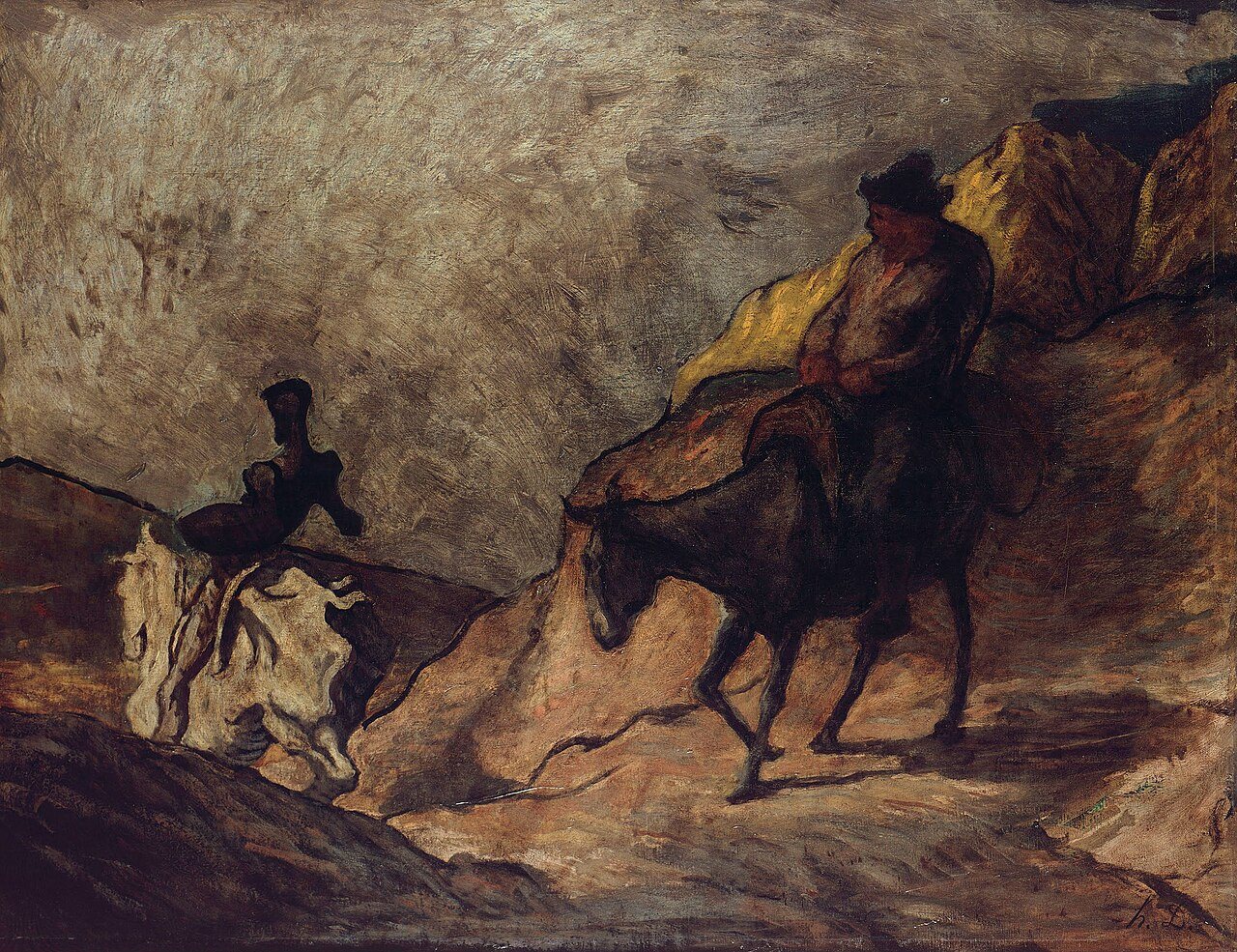
Cervantes's Sancho Panza does more than follow the knight. He sees the world as it is, and that keeps Don Quixote alive. Every strong leader needs a right hand like that: loyal, and able to see what the leader cannot.
Frequently asked questions
What does it mean to be the right hand of a CEO or founder?
It is the role of the person who turns the leader's ideas into processes, absorbs part of the tension and conflict, and holds the company culture when the leader is absent. Often this is the COO, managing director or deputy.
What are the risks of being the number two in a company?
The main risk is merging with the founder: the number two loses their own voice and cannot object. The company loses a corrective to the leader's mistakes, the number two stops growing, and the founder's departure becomes a personal crisis.
How do you build a healthy relationship between a founder and a COO?
Agree on authority, ask for the number two's view before stating your own, take disagreement seriously, avoid making them the permanent "bad cop", and invest in their professional development.
Who is Wags in Billions?
Mike "Wags" Wagner is the COO of the hedge fund Axe Capital and the long-standing right hand of its founder, Bobby Axelrod. He is a fictional character whose story is a useful way to discuss the number two role.
How can an external consultant help the number one and number two?
By helping them see how roles and tension are actually distributed, facilitating a conversation about authority and disagreement, supporting the number two in finding their own position and preparing the company for a future handover of power.