Scaling a business too fast: what the myth of Icarus tells founders about growth and burnout
Daedalus warned his son about two dangers, the sun and the sea. What the Icarus myth says about a company that grows faster than its structure, and about the founder carrying that growth
Most plans for growth model the money: cash flow, hiring, new markets. The risks of scaling a business too fast that hurt most are harder to put in a spreadsheet, because they sit in people, and first of all in the founder who carries the growth. The Greeks told this story as the myth of Icarus. It has a master craftsman who knows the limits, a young man flying for the first time, and a detail that usually gets lost: the father warned about danger in two directions.
- A company can grow faster than its structure, its people and its founder can mature. That is the central risk of scaling, and financial reports show it late.
- Daedalus warns Icarus of two dangers: the sun will melt the wax, the sea spray will weigh the feathers down. In business these are the two growth mistakes, racing without support and caution that drags the company down.
- Founder burnout often begins on the way up, when success seems to prove there are no limits. Analytical psychology calls this inflation.
- Owners, boards and HR should agree on the ground, before take-off, who plays Daedalus in the company and how that person will be heard in flight.
The myth in brief
Daedalus is an Athenian inventor, the man who built the Labyrinth on Crete. King Minos will not let him leave the island, so Daedalus decides to escape through the one route left open: the sky. He lays out feathers from short to long, binds them with thread in the middle and fixes them with wax at the base, and makes two pairs of wings, one for himself and one for his son. This is how Ovid tells it in Book VIII of the Metamorphoses.
Before they set off, Daedalus gives Icarus one instruction: keep to the middle course. Too low, and the spray will make the wings heavy. Too high, and the sun will scorch them. As they fly, a fisherman, a shepherd and a ploughman look up and take them for gods.
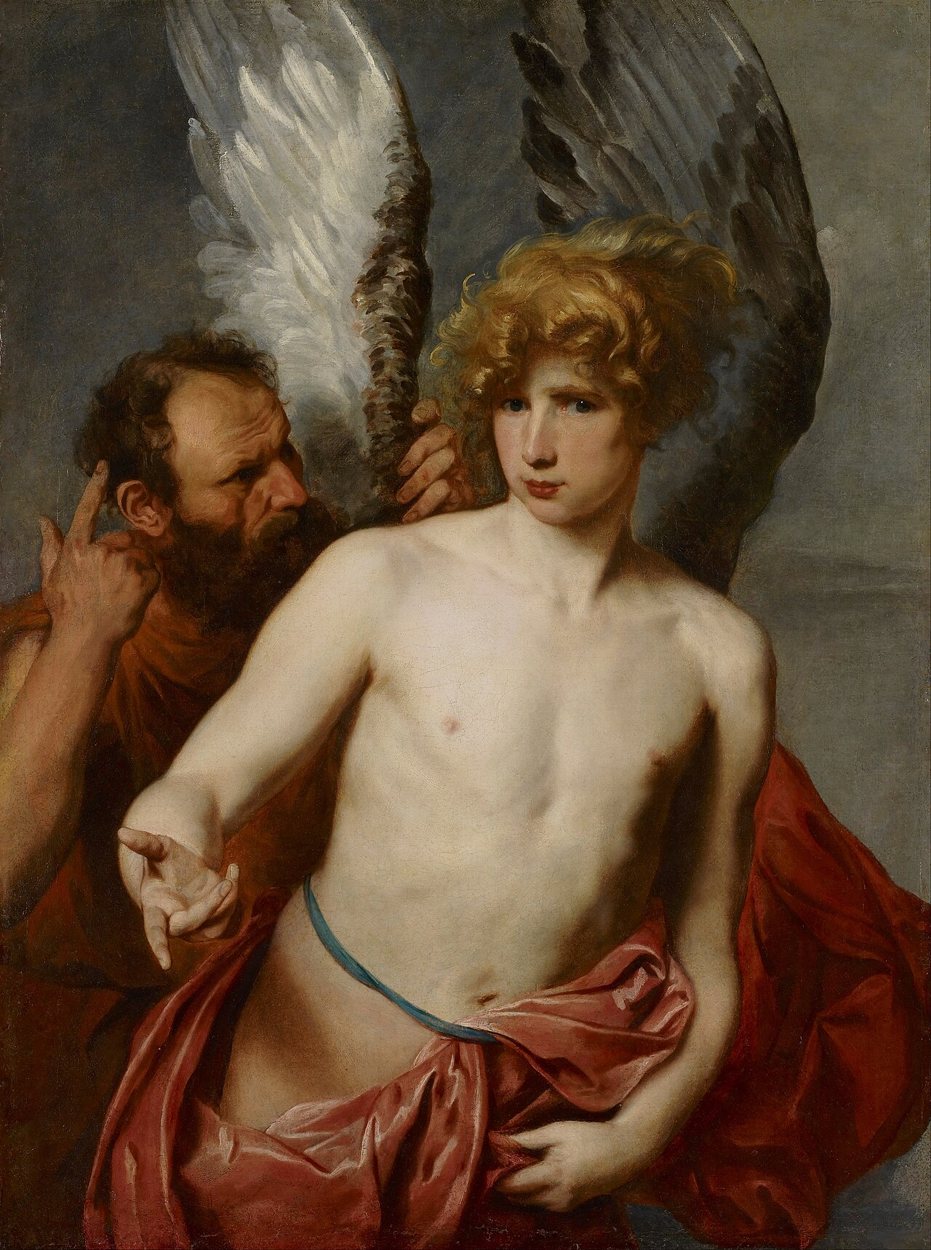
Icarus starts to enjoy the flight, leaves his father behind and climbs higher. The sun softens the wax, the feathers fall away, and he drops into the sea calling his father's name. The sea is named Icarian after him. Daedalus finds the body, buries his son on the island that becomes Icaria, and curses his own craft.
What goes wrong when you scale a business too fast
The wings in the myth are well made, and the structure holds. What fails is the binding, the wax that keeps the feathers together. In a company the wax is everything that never appears on the balance sheet: trust between people, clear agreements, the habit of naming problems out loud, the informal links that made things work while the whole team fitted in one room. Under rapid growth, these are the first things to melt.
- Decisions. With twenty people the founder knows everything and decides fast. With two hundred, the founder's speed becomes the bottleneck, and no decision-making system has been built to replace it.
- People. Those who did well at the start are promoted to run growing departments, and some find themselves in roles nobody prepared them for.
- Culture. New hires arrive faster than they can learn how things are done. Values that used to travel through the founder's personal example stop reaching people.
- The founder. Their load grows with the company, while their ways of recovering stay the same or disappear.
In a 1972 Harvard Business Review article, Larry Greiner described organisational growth as calm periods of evolution broken by crises. He called the first one the crisis of leadership: the company has grown beyond the point where the founder can run it the way they did at the start. Each new stage asks the company to give up part of what made it successful in the previous one.
Why Icarus does not hear the warning
Ovid's Icarus is a boy who has just discovered that he can fly. That feeling is stronger than any advice. Climbing is persuasive in itself: every metre gained looks like proof that there is more height to gain.
Analytical psychology has a word for this: inflation. A person identifies with something larger than themselves, such as success, a mission or the image of the heroic founder, and loses the sense of their own limits. Marie-Louise von Franz, one of Jung's closest collaborators, wrote about the archetype of the puer aeternus, the eternal youth: the pull upwards, the inspiration, the impatience with limits and the difficulty with slow, earthbound work. Icarus is one of its best-known images.
In a growing company, the surroundings feed the inflation. Investors expect the next round, the team is proud of the pace, the press writes about success. The fisherman, the shepherd and the ploughman look up and see a god. It becomes harder for the founder to say they are struggling, because that does not fit the image everyone admires.
Founder burnout starts on the way up
We tend to think of burnout as what follows failure. Often it begins during the climb. The World Health Organization describes burnout as the result of chronic workplace stress that has not been successfully managed, with three dimensions: exhaustion, increased mental distance from one's job or cynicism, and reduced professional efficacy.
In a founder the early signs are easy to mistake for normal working life. Sleep gets shorter, decisions get postponed, irritation with the team grows, interest in the work turns into a sense of obligation. From the outside the company is flying. Inside the person leading it, the wax is melting.
Founders are often identified with their companies, so admitting exhaustion feels like admitting the business is weak. They hold themselves higher and more confidently than ever, and partners, family and the board hear the truth late.
The world barely notices the fall
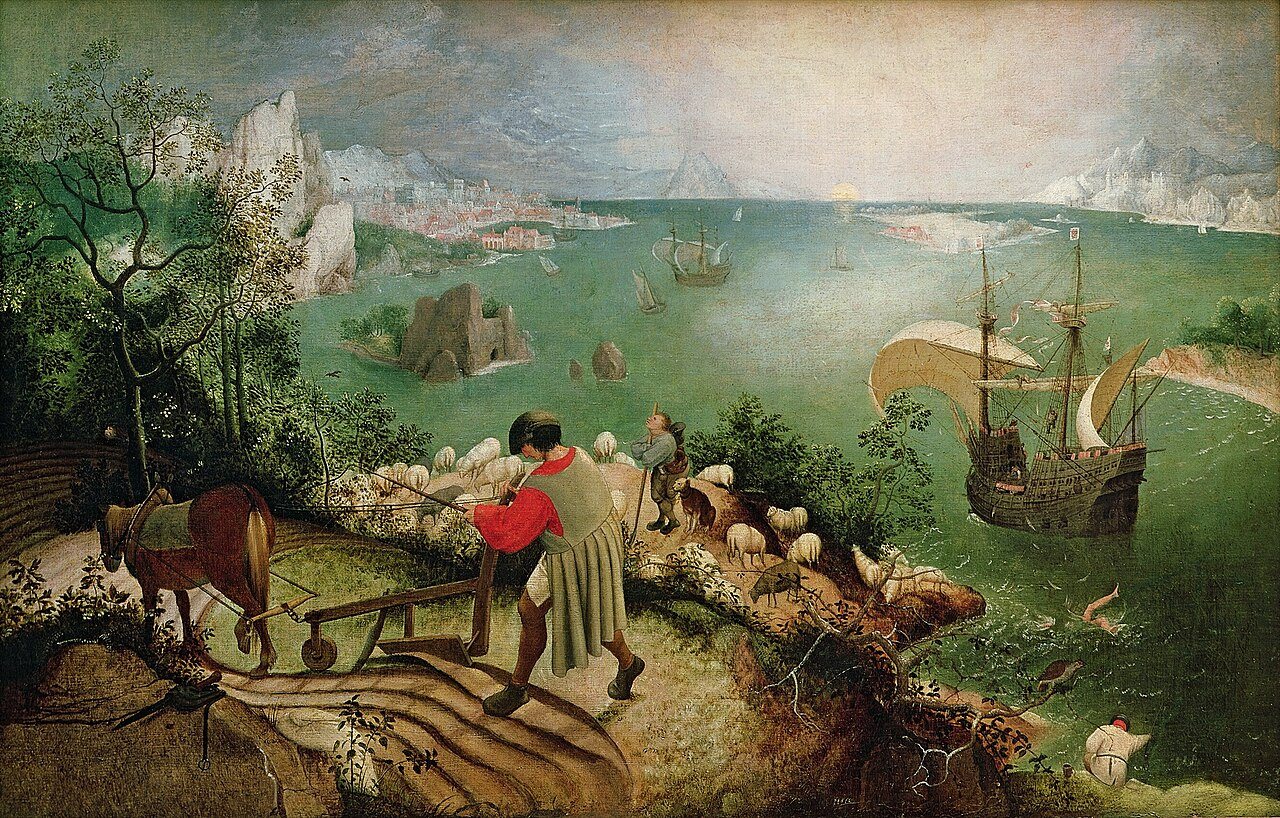
In the painting long attributed to Pieter Bruegel the Elder, Icarus is almost invisible. Bruegel takes the very witnesses Ovid names, the ploughman, the shepherd and the angler, and has none of them look at the boy in the water. The ploughman keeps to his furrow, the angler watches his line, the ship sails on. All we see of Icarus is a pair of legs near the right edge. In 1938 W. H. Auden wrote "Musée des Beaux Arts" about this picture and the calm way the world turns away from someone else's disaster.
For a company there is an uncomfortable truth here. While the founder is rising, people admire them. When they fall, the world keeps ploughing: the market does not pause, customers move to whoever is still delivering, strong employees find other jobs. The cost lands on the company and on the person, and those around them notice last.
Two ways to get growth wrong: too high and too low
Daedalus names two dangers, and the second is often forgotten. Fly too close to the water and the feathers soak up spray and pull you down. In business this is the company that, after its first scare, becomes afraid of growth: approvals multiply, every step is checked three times, and the strongest people leave for places where they can get something done. Greiner called a similar stage the crisis of red tape.
The middle course Daedalus describes is a flight with constant checks: where are we, is the structure holding, what is happening to the people. A company can grow quickly as long as someone keeps checking the wax.
Who plays Daedalus in your company?
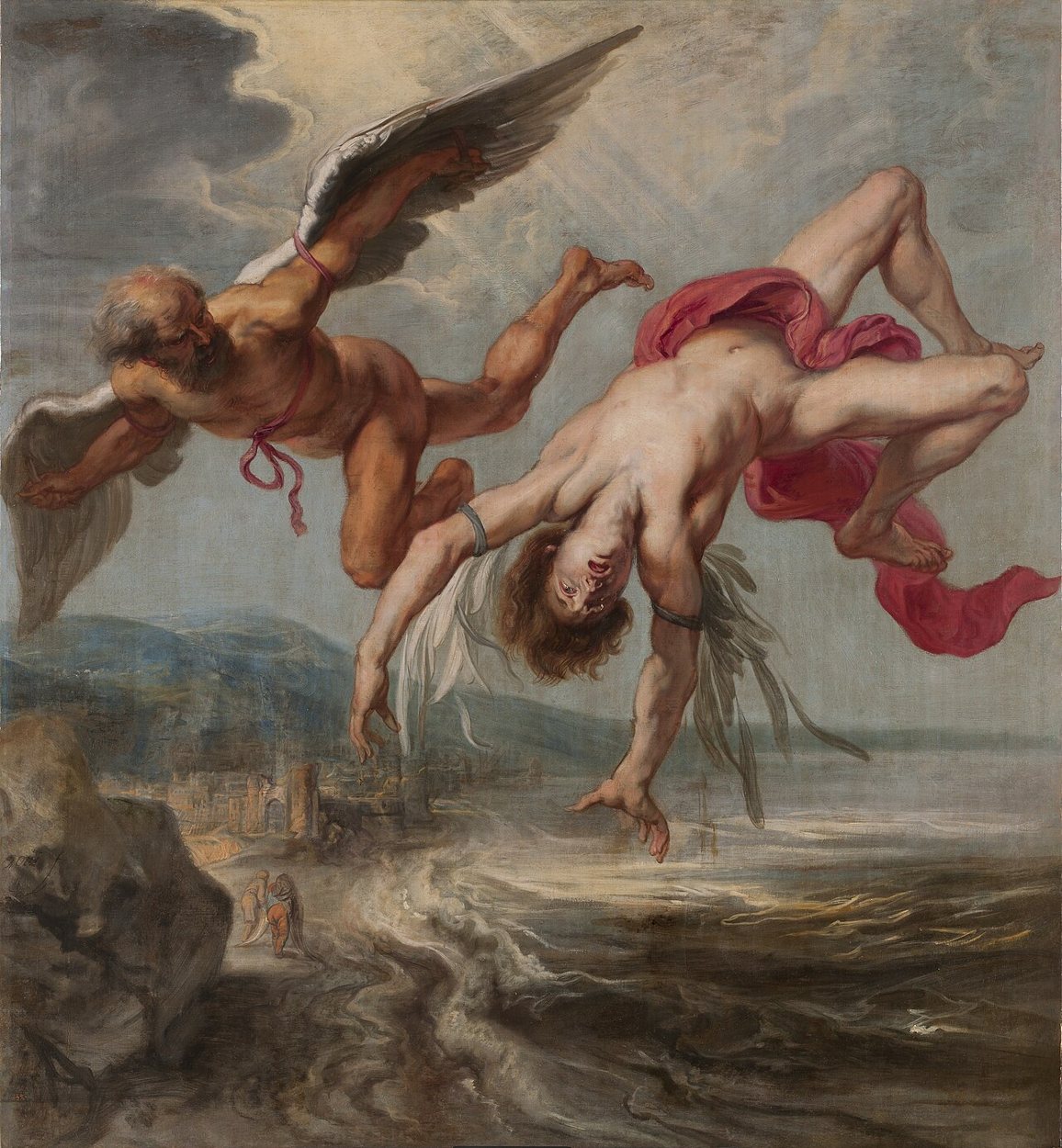
In the myth the father flies alongside, sees everything and cannot help. His warning was given once, before take-off.
A growing company has several people who could fill this role: a co-founder, an experienced COO, an independent board member, an outside adviser. The role needs to be agreed in advance, on the ground. Once the company is in the air, a warning is much harder to hear.
Daedalus has another side, too. In Ovid, as he buries his son, a partridge watches from a tree. It is Perdix, Daedalus's nephew and gifted apprentice, whom the master once threw from Minerva's citadel out of envy. The one who preaches moderation knows ambition and rivalry from the inside. An experienced person beside the founder is most useful when their own history and interests are visible and open to discussion.
What owners, boards and HR can do
- Budget for people the way you budget for money. Before each new stage, discuss who will lead, who needs to be developed and where the founder will stop coping alone.
- Appoint Daedalus before take-off. Agree who has the right to say "stop" and how that word will be heard.
- Watch the wax. Track trust, agreements and the quality of conversations in the team alongside revenue and headcount.
- Treat the founder as a person. Workload, sleep, rest and a place to say "this is too much" are part of risk management.
- Tell caution from fear. After a setback, companies are tempted to skim the water, which is a risk too.
- Bring in an outside view. A business psychologist or consultant sits outside the hierarchy and can notice where the company and its leader have climbed higher than the wings can bear.
Icarus became the symbol of overreach, yet two people fly in the myth. Daedalus made it across, on the same kind of wings and under the same sky, by keeping to the middle. Flying is possible, as long as someone remembers what the wings are made of.
Frequently asked questions
What are the main risks of scaling a business too fast?
Beyond financial risks such as cash-flow gaps and hiring mistakes, the biggest risks concern people and management: decisions bottleneck at the founder, people are promoted into roles they are not ready for, culture does not reach new hires, and the person at the top becomes overloaded. Financial reports tend to show these risks late.
How can you tell that a company is growing faster than it can handle?
Typical signs: decisions pile up with the founder, the same agreements have to be repeated, conflicts between departments increase, strong people leave, bad news arrives late, and managers have no time for anything except the urgent.
What are the signs of founder burnout?
Exhaustion that does not lift after rest, growing distance or cynicism towards the business, and a sense of working less effectively. Sleep problems, irritability and postponed decisions often come with it. If this lasts, it is important to see a doctor: a psychologist does not make diagnoses and does not replace medical care.
What does the myth of Icarus have to do with business growth?
The myth describes two dangers of growth precisely: flying too high, towards the sun, and too low, towards the sea. Icarus stands for the founder on the rise who stops hearing warnings; Daedalus stands for experience that knows the limits. Landscape with the Fall of Icarus adds a third point: the world barely notices the fall.
How can a business psychologist help a fast-growing company?
By helping the founder and the team see what growth pressure is doing to people and to the leader; clarifying who plays the Daedalus role and how they will be heard; preparing managers for new roles; and supporting the founder where admitting exhaustion out loud is hard.